Right now, our screens are absolutely dominated by two things: book-to-screen adaptations and good, old-fashioned yearning. We want the slow burn, we want the heartbreak, and most importantly, we want to know if television and film writers actually stuck to the original books.
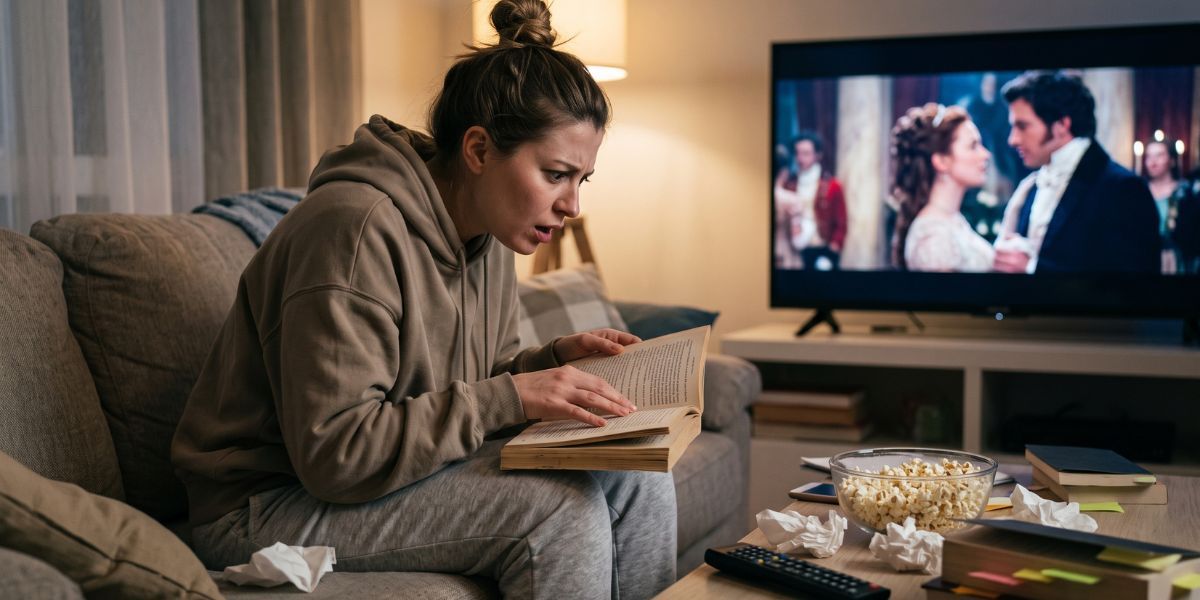
Whenever a beloved novel hits the screen, fans immediately become private investigators, pausing their televisions to double-check the source material. Search interest in “book adaptations” has hit an all-time high this year, and everyone is Googling the exact same questions. From shocking plot twists to masquerade ball reveals, let’s dive into the biggest trending adaptations right now and answer the ultimate question: did it happen in the book like it did on screen?
WARNING: SOME SPOILERS AHEAD
Verity: The Thriller Driving Us Crazy
Colleen Hoover’s dark psychological thriller Verity is dominating search trends, with readers and viewers alike obsessively trying to untangle the truth. Fans are frantically asking two main questions: “How many kids did Verity have in the book?” and “How did Verity die in the book?”
Let’s clear it up. In the novel, Verity and her husband Jeremy have twin daughters, Chastin and Harper, who both die in tragic circumstances, leaving behind their surviving son, Crew. The core twist of both the book and the recent on-screen adaptation remains incredibly similar. Lowen finds Verity’s hidden manuscript, which claims Verity purposely murdered her own children. Lowen shows this terrifying document to Jeremy, who then confronts and kills Verity—with Lowen helping to make it look like an accident.
However, just like in the book, the on-screen version leaves us with a massive cliffhanger. Lowen discovers a letter from Verity claiming the manuscript was nothing more than a fiction writing exercise, meaning Jeremy might have been the villain all along. Hollywood kept this twisted ending intact, and it is successfully dividing a whole new audience.
Bridgerton: The Sophie Reveal
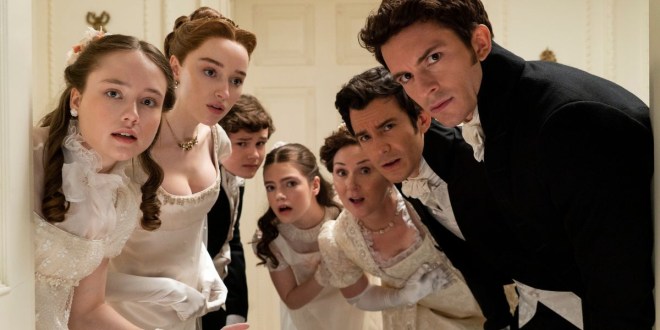
We cannot talk about romance without checking in on the Bridgerton universe. Fans are heavily searching, “How does Benedict find out about Sophie in the book?”
In Julia Quinn’s original novel, An Offer From a Gentleman, Benedict meets a mystery “Lady in Silver” at a masquerade ball but has no idea she is actually Sophie, a maid. He spends months pining over this unknown woman while simultaneously falling for Sophie. In the book, the big reveal happens slowly and organically. Benedict sees Sophie playing a game with children while wearing a blindfold. The blindfold mimics her masquerade mask, and it instantly triggers his memory, making him realise his two loves are actually the same woman.
The television adaptation, however, decided to speed things up. To move the plot along faster, the show has Benedict discover Sophie’s secret by finding her necklace in his room, leading to a much more sudden realisation. Many readers prefer the slower, more emotional discovery from the novel, which explains why the internet is currently debating the change!
Off-Campus: The Hunter Davenport Rewrite
Elle Kennedy’s spicy college hockey romance series, Off-Campus, has a massive fan base, so any changes made for the screen are instantly noticed. Right now, viewers are deeply confused, searching, “What did Hunter Davenport do to Dean’s sister in the book?”
Here is the truth: absolutely nothing! The television show created a brand new storyline where Dean hates Hunter because of a mysterious past incident involving Dean’s sister, Summer. The showrunners added this rivalry to create more tension and slow down the central romances.
If you look at the original books, Hunter and Dean were just regular teammates who got along fine. Summer’s major book drama was actually with an entirely different character named Colin Fitzgerald. This is a classic case of television writers mixing up the character dynamics to add extra drama for the screen.
Dracula: Hollywood’s Biggest Glow-Up
In a surprising twist, Bram Stoker’s Dracula is trending, with people asking, “What does Dracula look like in the book?”
When we think of Dracula in the movies, we picture a suave, handsome man in a sleek black tuxedo. Hollywood has spent decades making vampires incredibly attractive. But if you go back to the original 1897 novel, Dracula was not a romantic lead.
The book describes him as a tall, old man dressed entirely in black, who is completely clean-shaven except for a long, white moustache. He also had bushy eyebrows that met in the middle, sharp protruding teeth, and”worst of all” thick hair growing in the centre of his palms. It is safe to say that film studios gave the world’s most famous vampire a massive Hollywood makeover.
We Need to Bring Back Yearning
Finally, we can’t talk about page-to-screen adaptations without talking about the everyone’s current favourite obsession: “yearning.” Viewers are tired of quick romances; they want intense, prolonged longing. The phrase “is yearning genetic” actually became a breakout search this year, along with related words like “pining” and “limerence.”
When it comes to bringing this emotion from the page to the screen, nobody beats The Notebook. Fans still agree that Noah Calhoun is the ultimate king of yearning, and the film perfectly captured the obsessive devotion from the book. Modern characters are keeping the trend alive too, with Conrad Fisher from The Summer I Turned Pretty ranking as the top yearner this year. Whether in print or on television, audiences are loudly demanding storylines where “the guy falls first” and is completely “obsessed with the girl.”
So, whether you are stressed about a book changing its plot for TV, or just patiently waiting to see if two fictional characters will finally get together, one thing is certain: our search histories prove we are more invested in fiction than ever before.